Each of us were given a time slot to present our FMP to the class so we could have a chance to discuss our ideas and develop them. My presentation included the work of photographer Jimmy Nelson and National Geographic. Both sources raised questions as to their validity.
Nelsons photographs from the collection 'before they pass away' was criticised by the movement Survival International, an organisation that fights for the rights of indigenous and uncontacted people. Stephen Cory director of Survival International stated that Nelsons photographs 'bear little relationship either to how the people look now, or to how they've ever appeared'. He noted how the Waorani Indians were shown in nothing but their waist string, when in reality these people have routinely worn clothes for a generation and have items such as watches and hair clips all of which were not presented within the photographs. Corry stated "the images look like a throwback to a past era, but they're also a contemporary invention" and continues to emphasises the fabrication of the collection.
The leading problem with the collection was the naivety behind the photographs. Survival International and tribal leader Benny Wenda noted how Nelson glosses over the violence these tribes people endure and how they are not simply fading away but being destroyed through theft of land and resources. The full article is shown below.
_______________________________________________________________________________
Survival attacks photographer Jimmy Nelson’s portrayal of tribes 2 June 2014
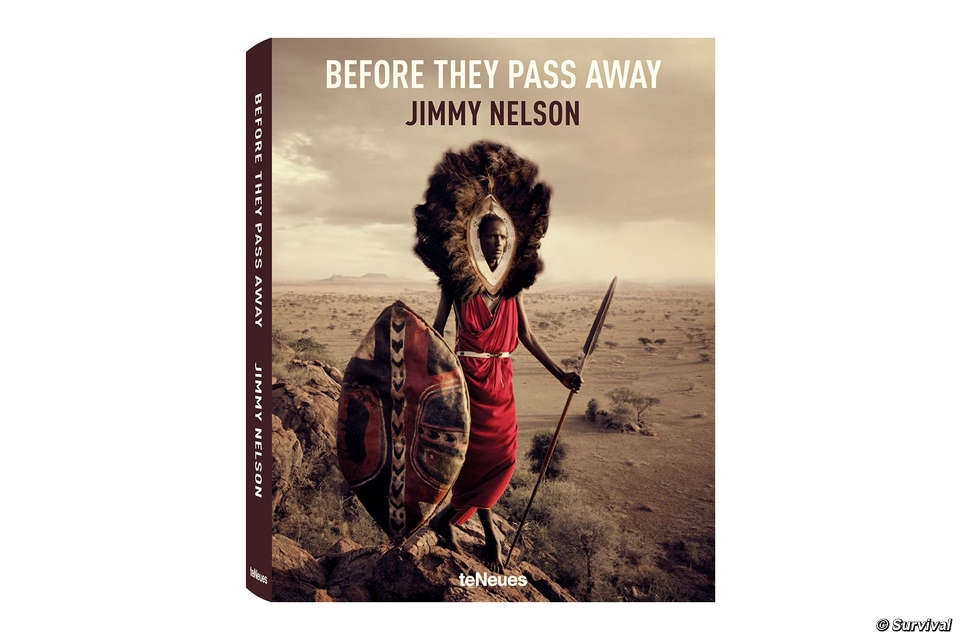
Survival International Director Stephen Corry denounces Jimmy Nelson's portrayal of tribal peoples as ‘hubristic baloney’.
© Jimmy Nelson/teNeues
The work of famed photographer Jimmy Nelson, creator of coffee-table book “Before They Pass Away”, has been attacked in a new exposé by Survival International Director Stephen Corry as ‘hubristic baloney’ which presents a false and damaging picture of tribal peoples.
Nelson writes that his recent $150 book of “portraits” of tribal people was motivated by the desire to “search for ancient civilizations… and document their purity in places where untouched culture still exists”. The “cultures” he found are supposedly “unchanged for thousands of years”.
But Corry denounces the work as a photographer’s fantasy, bearing little relationship either to how the people pictured look now, or to how they’ve ever appeared.
The photos of Waorani girls from Ecuador, for example, portray them shorn of the clothes that contacted Waorani routinely wear, and wearing “fig” leaves to protect their modesty, which they have never done (previous generations of Waorani women wore a simple waist string). Corry writes that Nelson not only presents a fictionalized portrait of tribal people, but glosses over the genocidal violence to which many of the tribes pictured are being subjected, and even pretends that such tribes can be “saved” from the “inevitability” of “passing away” simply by being photographed.

The photos of Waorani girls from Ecuador show them wearing ‘fig’ leaves to protect their modesty, which they have never done.
© Jimmy Nelson/teNeues
Corry said today, "Given how much publicity Jimmy Nelson’s book has had, I think it’s important to expose the work for the damaging fantasy it is, because it ignores the crimes being committed against these peoples in the name of ‘progress’. No mention, for example, in the description of Ethiopia’s Mursi tribe, of the forced relocation, beatings, assaults and disappearances to which they’re being subjected.
“No mention, in the description of Tibetans, of China’s brutal oppression. No mention of the estimated 100,000 Papuans who have died since Indonesia’s ruthless occupation. No, the tribes are simply, inevitably, ‘passing away’. That’s dangerous claptrap which plays into the hands of all those who want them to ‘pass away’ as quickly as possible.”
__________________________________________________________________________________
Nelson did respond admitting that he staged and directed individuals with their co-operation. He went on to state the shoot "was never supposed to be a reportage but an aesthetic, romantic, subjective, iconographic representation of people who are normally represented in a very patronising and demeaning way".
Previous to the presentation I was aware of the criticisms of Nelsons gallery but after further research into the the response from Tribal leaders such as Benny Wenda I might go back and look into other possible topics that are better documented in order to get an authentic depiction of a tribal culture.

No comments:
Post a Comment