Thursday, 30 April 2015

Monday, 27 April 2015
Papahanaumoku sound track
Creating these three videos helped me compare the different styles of music. All of these songs have a Hawaiian style to them and add a different spin on the animation.
Sunday, 26 April 2015
Wednesday, 1 April 2015
iMovie

Although I had access to the more complex movie editing programs I felt confident using iMovie and knew I wouldn't be using any effects so a more detailed program was not needed.
Once I had imported all the frames into the program I highlighted all of them in order to alter the settings. The top right 'i' button allowed me to change the duration of each frame, I brought this down to 0.1. The frames then moved at a fast enough pace so they then looked animated when placed together. After this I needed to change the settings of the picture as they would automatically zoom in, I used the crop tool and put all the frames under the 'fit' setting. This setting kept the frame as a normal still picture.
iMovie being an apple product also linked up with its other programs such as itunes. This meant testing out sounds tracks was very simple as everything was already loaded onto the computer and ready to go. After I found the right sound track that fitted the animation I would drag it below the frames and apply fade out setting so the track wouldn't suddenly stop as the track is fairly longer than my animation.
After all the frames were placed together and I was happy with the final result I had to export the clip as an MP4 file so I would be compatible with all computers and not just Apples.
Tuesday, 31 March 2015
Animating process
Youtube Video's

I origionally planned to use my own footage for rotoscoping but as the story developed using my own footage become unrealistic. Once I had decided to incorporate animals within the animation I began looking for footage elsewhere. Youtube was the most useful source as they have such a huge libary to choose from. I primarily looked for footage taken from the Islands of Hawaii to ensure the footage was an accurate dipiction of Hawaii.
Screenshot Video

For rotoscoping I would need a large amount of frames close enough together to give the illusion of movement. For this I would press shift, command, 3 to take a screen shot of the video clips that I had put on full screen. I would use to space bar to quickly play and pause the screen for me to take the screen shots so closely together.

For rotoscoping I would need a large amount of frames close enough together to give the illusion of movement. For this I would press shift, command, 3 to take a screen shot of the video clips that I had put on full screen. I would use to space bar to quickly play and pause the screen for me to take the screen shots so closely together.
Number Frames

I created a folder for each scene in order to keep everything organised.
Open in gimp using two layers


For rotoscoping I would need to trace over frames that make a moving image when put together. To achieve this digitally I needed to open each frame in the gimp program in two layers. By doing this I could Lower the transparency of the screen shot and draw on the white layer. Using a tablet the process was fairly simular to tracing pictures manually. After I had completed the drawing process I would drag the transparency down to 0% leaving only the outlines I had made.
Set transparency

In order to clearly see the pen marks the transparancy setting of the picture needs to be reduced. I bring it down to 50% as this gives me an equal visual of both the origional picture and the new canvas I will be drawing onto. After the picture is completed I will need to bring it down to 0% leaving only the new layer I have added.
Trace over screenshot (rotoscoping)

Gradually fade out images (-10% each frame)


For each new scene added in I would need to include a transition. This involved me decreasing the transparency of the pen on the outgoing frame and increasing the transparency of the incoming. This process would take 10 frames to complete on each of the scenes makeing it a total of 20. These transition frames would take the lonest to complete as I would have to overlap images and alter the settings of the tools I was using.
Fade in next image (+10% each frame)

Export image as pdf file

Once completed I would need to export the image. Usually Gimp would automatically save the file as an XCF file, this allows me to go back to the picture with all the settings the same as how I left them. This doesnt allow me to use the picture in editing programs such as iMovie therefore I would have to go on save as, then type in the name of the file replacing the '.XCF' with '.JPG'. This would turn the file into a picture file meaning I could use it like I would a photograph.
Final frame folder

All of the finished frames were places in the same folder so I could highlight and put them all into iMovie at the same time.
Monday, 23 March 2015
Hawaiian Music

Finding royalty free music is one of the most difficult parts of the process. Ontop of the legal issue with using any music you want, finding the music that fits is also something that proves difficult. I also wanted to avoid it becoming like a music video where the visuals become background for the musical. Because of this I feel it will be best to try and avoid any music with lyrics as this may draw attention away from the animation.

Animated depictions of Hawaii
Using YouTube I was able to look at a variety of ways Hawaii has been depicted and draw inspiration from these animations.
Rotoscoping Study
My first introduction to rotoscoping was from watching bonus disks on Disney dvd's. They'd explain the process of how they'd bring the characters to life in such a smooth and realistic way by life drawing actresses who resemble the characters. As shown in the clip they'd get the actress to repeat movements whilst they would record them adding a Disney style to it. The model in the clip modelled for Aurora as well as Cinderella and Anita (101 dalmations).
Its the quality of movement that made these films so successful as they add a realistic element to these fantsy films.
Its the quality of movement that made these films so successful as they add a realistic element to these fantsy films.
Here is a clip of a more contempuary source showing the final producted of a rotoscoping styled animation. This video completly follows the same method I would be following for my fmp (digital rotoscoping).
Sunday, 22 March 2015
FMP Character Design
I created a variety of different styled Hawaiian girls based on the different styles of Animation I had looked at. I only used black pen as I don't feel confident enough to animate in colour. There are two things I wanted to keep the same, the length of hair and the large eyes.


Friday, 20 March 2015
Storyboard (first draft)
This is my first draft of an animation based on Hawaiian goddess Papa.


I felt confident with this draft of the story board and felt I have gotten some intresting movements that would translate well into animation. After this I was able to search youtube for videos that resembled my storyboard, It was at this point I had to begin again. Finding these videos that matched the description I had already layout was difficult. Therefore I began the process again but instead watched the videos and then created a story board, this way I knew what I had planned was achivable.
Second and final Story board
By doing it in this order I felt I had more freedom to change my ideas and go in another direction with the story at any time. Instead I used the storyboard as a record of what I had done rather than what I was going to do.


By doing it in this order I felt I had more freedom to change my ideas and go in another direction with the story at any time. Instead I used the storyboard as a record of what I had done rather than what I was going to do.


Tuesday, 17 March 2015
FMP Movement Study
Life drawing from videos:
In order to prepare myself for rotoscoping I decided it would be good to take inspiration from a few youtube videos that reflect the style I am planning on going towards. Most noticeably I took inspiration from Tarzan and Pocohonatas as both present strong and powerful characters whom use body language as a form of communication. Both characters have Animator Glen Keane in common, who was supervising animator and designer of these character. He is concidered one of the best Animators of all time being held up to the successs of the nine old men (Disneys nine most influential).


These drawings were inspired by youtube videos of dancers that resemble tribal or cultural dances that relate to my themes.


Monday, 2 March 2015
FMP Hawaiian Goddess Papa
The Goddess Papa (Papahanaumoku) is the mother of the islands and ancestor to all those born there as is her husband, sky father Wakea. She is considered the god of creation and is therefore worshiped by women specifically mothers as Papa gives life.
Papa is said to have been born on the island of O'ahu in the Halawa Valley, it is here that she grew up. She would move on to explore the other Islands of Hawaii, where she would eventually meet Wakea. Together they fell in Love and had a daughter Hoʻohokukalani, which translates to 'one that creates the stars of heaven'.
I origionally wanted to study the God Lono, god of agriculture, fertility, rainfall, music and peace. I origionally thought Lono was female but it later turned out Lono was a male. I had already made plans to and sketches for a goddess therefore I felt it would be better to continue on with a goddess and find another that fit the characteristics I had already began working on.
Papa is said to have been born on the island of O'ahu in the Halawa Valley, it is here that she grew up. She would move on to explore the other Islands of Hawaii, where she would eventually meet Wakea. Together they fell in Love and had a daughter Hoʻohokukalani, which translates to 'one that creates the stars of heaven'.
I origionally wanted to study the God Lono, god of agriculture, fertility, rainfall, music and peace. I origionally thought Lono was female but it later turned out Lono was a male. I had already made plans to and sketches for a goddess therefore I felt it would be better to continue on with a goddess and find another that fit the characteristics I had already began working on.
FMP Gods and Goddesses of Hawaii
I made a choice to use the gods and goddesses of Hawaii as inspiration for my FMP. My original plan was to base my animation on reality and document the movement of people and tribes from around the world. After feedback it was suggested that I was naive on the subject and come at it from an western point of view where I view these people as exotic. I personal didn't feel the same but in order to not offend anyone I moved onto a more accepted topic. By studying folktales I feel I will have creative freedom to go about it in my own way.
I decided I'd only study the female gods as i'd be using rotoscoping therefore it would make more sense as I could film myself for parts. I narrowed it down to five goddesses that most interested me mainly due to colours and movements that would be associated with their characters.
Pele Goddess of the volcanoes, as well as fire, lightning and wind.

Hina Goddess of Moon.

Laka Goddess of the hula.


Poliahu One of the four goddesses of snow. The rival of Pele.


Sunday, 1 March 2015
FMP Hawaii
Because of the response to some of the sources I was using as references's for my FMP on indigenous tribes I decided it would be more reliable if I altered the topic to one that I had more reliable information on. As well as this I have my own photographs and footage from Hawaii from visits there over the years.

In this months issue of National Geographic they had an article called 'pure hawaiian' where they focus on the native Hawaii. This gave me the idea to focus on this culture as it was one I was more familiar with and there is a huge amount of information on it. Below are a few pictures taken from the article which centres around the relationship the people of Hawaii have with water.

Brief History on Hawaii:
The most popular believe is that the island of Hawaii was first populated in the 3rd centry by polynesians later followed by Tahitians who took over the island. Despite this popular believe there is still no evidence backing this and still a number of other theories of how the population of Hawaii came to be. Amoungst theories are ledgends past down through generations of Native Hawaiians.
It is known that the arrival of Captain James Cook had a dramatic effect on the population of Native Hawaii. The visiters brought with them diseases that the natives couldnt fight off. The population is estimated to have dropped as much as from 800,000 in 1779 to 37,656 in 1900.
Saturday, 7 February 2015
Hand Moving Animation
Following the world turning Animation I was suggested to make a 2 second clip of a hand moving just to test my ability to rotoscope human movements. This helped as I was confident using rotoscoping but I hadn't yet recorded human movement in the style i'd be using for my FMP. I used webcam and then turned the footage into still frames and selected every other frame to trace. There is a slight pause half way through the animation where another frame is need to make it smoother but other than that i'm confident with the outcome of it.
Friday, 6 February 2015
World Turning Animation
Using rotoscoping I created this animation of the earth turning. I used a video from google earth and took screenshots of it every half second which I could then use to trace over and put together. I chose to use rotoscoping as it's the best way to get an accurate representation of movement and is a method I am familiar with. I kept it simple using black lines with no detail, tone or colour which allowed me to work out how long I would need to create a full length short in this style. I'm happy with how this turned out although it would be smoother had I used more frames. I used a total of 44 frames which came to 5 seconds in total, for my FMP I may use 16 fps in order to smooth it out.

Thursday, 5 February 2015
River Boat Animation
I rarely animate from scratch and improvise how the subject moves so this was one of the more challenging parts of animation. Once I'd started, the process was quick and easy but i'd been so used to rotoscoping that this was out of my comfort zone. After looking at pictures of river boats I did a basic sketch of the boat from behind and scanned it and used it as a template to draw over, I did the same from the background. Rather than drawing each individual frame id copy and paste the boat in and gradually make it smaller giving it the illusion that its travelling away from us. It ended up being far quicker than i'd thought so I ended up adding colour and sound making it more interesting.
Sunday, 1 February 2015
FMP Presentations
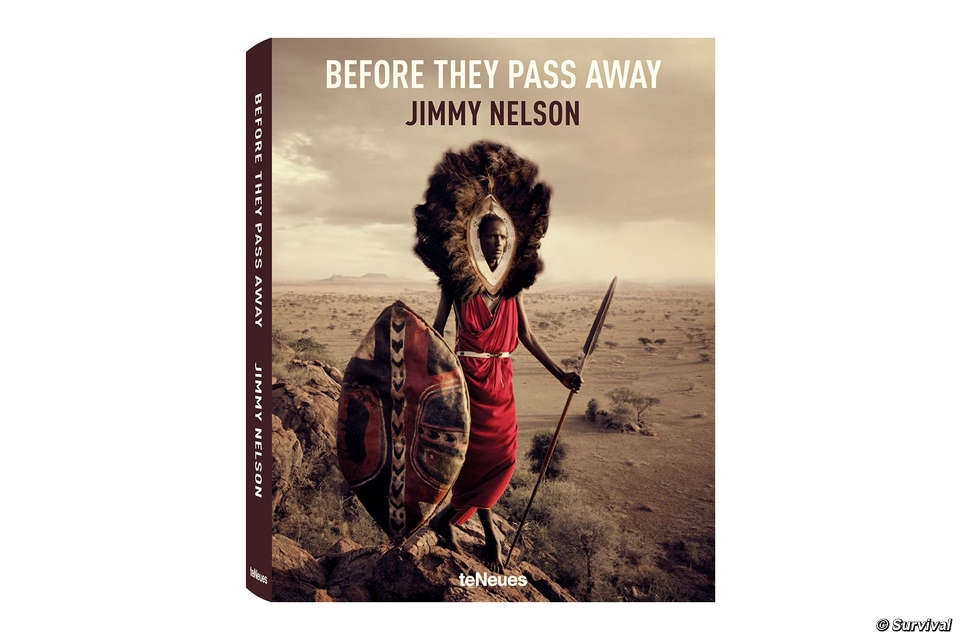
Each of us were given a time slot to present our FMP to the class so we could have a chance to discuss our ideas and develop them. My presentation included the work of photographer Jimmy Nelson and National Geographic. Both sources raised questions as to their validity.
Nelsons photographs from the collection 'before they pass away' was criticised by the movement Survival International, an organisation that fights for the rights of indigenous and uncontacted people. Stephen Cory director of Survival International stated that Nelsons photographs 'bear little relationship either to how the people look now, or to how they've ever appeared'. He noted how the Waorani Indians were shown in nothing but their waist string, when in reality these people have routinely worn clothes for a generation and have items such as watches and hair clips all of which were not presented within the photographs. Corry stated "the images look like a throwback to a past era, but they're also a contemporary invention" and continues to emphasises the fabrication of the collection.
The leading problem with the collection was the naivety behind the photographs. Survival International and tribal leader Benny Wenda noted how Nelson glosses over the violence these tribes people endure and how they are not simply fading away but being destroyed through theft of land and resources. The full article is shown below.
_______________________________________________________________________________
Survival attacks photographer Jimmy Nelson’s portrayal of tribes 2 June 2014
Survival International Director Stephen Corry denounces Jimmy Nelson's portrayal of tribal peoples as ‘hubristic baloney’.
© Jimmy Nelson/teNeues
The work of famed photographer Jimmy Nelson, creator of coffee-table book “Before They Pass Away”, has been attacked in a new exposé by Survival International Director Stephen Corry as ‘hubristic baloney’ which presents a false and damaging picture of tribal peoples.
Nelson writes that his recent $150 book of “portraits” of tribal people was motivated by the desire to “search for ancient civilizations… and document their purity in places where untouched culture still exists”. The “cultures” he found are supposedly “unchanged for thousands of years”.
But Corry denounces the work as a photographer’s fantasy, bearing little relationship either to how the people pictured look now, or to how they’ve ever appeared.
The photos of Waorani girls from Ecuador, for example, portray them shorn of the clothes that contacted Waorani routinely wear, and wearing “fig” leaves to protect their modesty, which they have never done (previous generations of Waorani women wore a simple waist string). Corry writes that Nelson not only presents a fictionalized portrait of tribal people, but glosses over the genocidal violence to which many of the tribes pictured are being subjected, and even pretends that such tribes can be “saved” from the “inevitability” of “passing away” simply by being photographed.

The photos of Waorani girls from Ecuador show them wearing ‘fig’ leaves to protect their modesty, which they have never done.
© Jimmy Nelson/teNeues
Corry said today, "Given how much publicity Jimmy Nelson’s book has had, I think it’s important to expose the work for the damaging fantasy it is, because it ignores the crimes being committed against these peoples in the name of ‘progress’. No mention, for example, in the description of Ethiopia’s Mursi tribe, of the forced relocation, beatings, assaults and disappearances to which they’re being subjected.
“No mention, in the description of Tibetans, of China’s brutal oppression. No mention of the estimated 100,000 Papuans who have died since Indonesia’s ruthless occupation. No, the tribes are simply, inevitably, ‘passing away’. That’s dangerous claptrap which plays into the hands of all those who want them to ‘pass away’ as quickly as possible.”
__________________________________________________________________________________
Nelson did respond admitting that he staged and directed individuals with their co-operation. He went on to state the shoot "was never supposed to be a reportage but an aesthetic, romantic, subjective, iconographic representation of people who are normally represented in a very patronising and demeaning way".
Previous to the presentation I was aware of the criticisms of Nelsons gallery but after further research into the the response from Tribal leaders such as Benny Wenda I might go back and look into other possible topics that are better documented in order to get an authentic depiction of a tribal culture.
Saturday, 31 January 2015
FMP Indigenous People Research

After researching world cultures I came across a map that presented a possible way that the world could be divided to present different cultures. It was divided into 11 European, Anglo American, Austral-European, Latin American, Slavic, Islamic, Sub-Saharan African, Sino-Japanese, Indic, Southeast Asian and insular oceanic.

Anglo American
Inuits - Canada

 The inuits first came to America looking for settlement but moved up North as the land was already occupied by the hostile Indians. The conditions in the arctic were too extreme for most but the inuits were able to adapt. Within Canada there were 8 different types of inuits that all settled on the coast. Each tribe had a distinct appearance that set them apart from one another.
Australia-European
.JPG)
 The Yali Tribe live in the highlands, the least accessible areas of the island. They are known as New Guineas most dreaded cannibals of the island, not online eating their enemy's but 'destroying them' so much so that they are said to grind their bones to dust which they later throw into the valleys to ensure they never return. The clothing that the Yali people wear is all symbolic, indicating there age, ranking ect. The women wear skirts made from grass where the layer continue to go up until 4, which shows that she is read to marry.
Yali Tribe-New Guinea
The Yali Tribe live in the highlands, the least accessible areas of the island. They are known as New Guineas most dreaded cannibals of the island, not online eating their enemy's but 'destroying them' so much so that they are said to grind their bones to dust which they later throw into the valleys to ensure they never return. The clothing that the Yali people wear is all symbolic, indicating there age, ranking ect. The women wear skirts made from grass where the layer continue to go up until 4, which shows that she is read to marry.
Latin America
Quechua People-Peru


Slavic
Tindi-Dagestan

 Dagestan is located on the coast of the caspian sea, which it shares with Kazakstan and Iran aswell as others. It is Russians most diverse republic with several dozen ethnicities. Dagestan translates to 'land of mountains', which is fitting due to its dramatic landscape. These diverse tribes of people live within the mountains often grouping together within there ethnicities rarely mixing. To the left is the isolated village of Tindi, taken by Hungarian born mountaineer in 1890. These people descend from Avar tribes and settled here in the 4th century AD due to the heavy rainfall perfect for farming. Islam is the dominate religion here with slight christian influence coming over from neighbouring country Georgia.
Islamic
Tuareg People- North Africa

 The Tuareg people follow a nomadic lifestyle, traveling across the boarders of North Africa in small communities. They are believed to be descendants from the North African Berbers. Cultural heritage is very important to the Tuareg culture, music and poetry are sacred on muslim holidays. There lifestyle originally would revolve around hoarding, but due to conflicts within the countries and natural disasters they have been forced into other lines of work. More recently some Tuareg have been forced into refugee camps after making demands to rule their own region leading to fighting.
Sub-Saharan African
Omo Valley-Ethiopia

 There are 8 different tribes on the Omo River in Ethiopia with other 200,000 people. Currently they are in danger as a dam is being constructed in the river which will eventually lead to these tribes being forced to relocate as they rely on floods. The tribes women will blow horns and shout taunts which the men whip them for, the scars are supposed to symbolise devotion to their husbands.
Sino-Japanese
Ainu People-Japan

 The Ainu people are the original inhabitants of Japan. They entered into a war against the Japanese over the ownership and influence of the island. As Japan grew they took over the south of the Ainu's Island it opened them up to a variety of new diseases such as small pox. There population dropped by 34% after 3 lost battles which lead them into being enslaved. During there enslavement, they were banned from using there language and they were slowly pulled away from there culture. They are considered to decend from the jomon jin people from Japan but contemporary researchers believe a possible european decedent is possible due to the facial structure of the Ainu men, although DNA analysis doesn't suggest any links.
Southeast Asia
Akha People-Lao

 They are an indigenous hill tribe, living in the high mountains in laos and yannan. They most likely originated from China, although the Akha disagree. Despite there long history in Lao they are degraded by other residents being referred to as "kha" meaning slave. They continue to use agriculture as a form of currency, trading from family to family or village. Akha religion is a mixture of animism and ancestor worship, they worship the land and nature. Their religion is very important to them so much so that to be considered Akha ethically by them is to practice their religion.
Subscribe to:
Posts (Atom)